The biggest reason people quit their calorie deficit isn't lack of motivation — it's hunger. Constant, gnawing hunger that turns every day into a willpower battle. If that's what calorie restriction feels like, almost nobody is going to stick with it for the weeks and months needed to see real results.
The good news: persistent hunger isn't a necessary feature of a calorie deficit. It's the result of approaching the deficit the wrong way. Change the approach, and you can eat less total energy while feeling genuinely satisfied — not suffering.
Why You Feel Hungry: A Quick Primer
Hunger is governed primarily by two hormones: ghrelin (the hunger hormone, rises when your stomach is empty and drops after eating) and leptin (the satiety hormone, signals that you've had enough). Food choices, meal timing, sleep, and stress all influence how these hormones behave.
A calorie deficit doesn't automatically cause ghrelin to spike all day. What causes that kind of relentless hunger is usually:
- Cutting calories too aggressively (more than 700–1,000/day)
- Eating low-satiety foods (highly processed, low in protein and fiber)
- Undereating protein specifically
- Poor sleep (sleep deprivation sharply raises ghrelin and lowers leptin)
- Meal timing that leaves too long between eating occasions
Fix any of these, and hunger during a calorie deficit drops dramatically.
Strategy 1: Prioritize Protein Above Everything Else
Protein is the most satiating macronutrient. Gram for gram, it produces more fullness than carbohydrates or fat. It also requires more calories to digest (the thermic effect of protein is 20–30%, vs 5–10% for carbs and 0–3% for fat), which means you burn more just processing it.
Studies comparing high-protein and standard-protein diets at the same calorie level consistently find that the high-protein group reports less hunger, preserves more muscle, and loses more fat. If you do one thing to make your deficit more sustainable, eat more protein.
Practical targets: aim for 0.7–1g of protein per pound of bodyweight per day. At 150 lbs, that's 105–150g. For a couple, building dinner around a lean protein source and keeping high-protein snacks (Greek yogurt, cottage cheese, hard-boiled eggs) in the fridge makes hitting this target almost effortless.
Strategy 2: Choose High-Volume, Low-Calorie Foods
Volume eating is one of the most underrated tools in weight management. The idea: your stomach stretches in response to volume, which sends satiety signals to your brain. Foods that are high in water and fiber deliver a lot of volume for very few calories.
The best high-volume foods:
- Leafy greens: 100g of spinach is about 23 calories. An entire bag fills a large bowl and takes real time to eat.
- Cucumbers, celery, peppers: 10–20 calories per 100g, mostly water, virtually infinite snacking potential.
- Berries: 30–50 calories per 100g, high fiber, sweet without triggering overeating for most people.
- Broth-based soups: Water dramatically increases food volume. A soup made from the same vegetables you'd eat raw occupies much more space in your stomach and slows gastric emptying.
- Air-popped popcorn: 4 cups for about 120 calories — a genuinely satisfying snack volume.
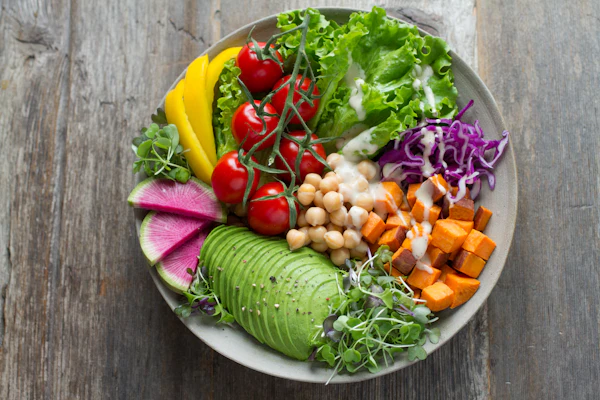
A plate built around high-volume vegetables takes longer to eat, fills your stomach, and costs fewer calories than an equivalent meal of dense, processed food.
Strategy 3: Eat Fiber — Lots of It
Dietary fiber slows digestion, blunts blood sugar spikes, and feeds beneficial gut bacteria that produce short-chain fatty acids linked to satiety signals. High-fiber meals keep you full longer — significantly longer than equivalent-calorie low-fiber meals.
The difference is measurable: a meal with 10g of fiber keeps most people full for 30–45 minutes longer than the same calorie meal with 2g of fiber.
Target 25–35g of fiber per day. Good sources: beans and lentils (7–8g per half cup), oats (4g per cup), whole grains, vegetables, and fruit. For a couple tracking meals, fiber is easy to see in any good calorie app and worth monitoring alongside calories and protein.
High protein + high fiber + high volume = satisfied at fewer calories. Build every meal around this combination and hunger during a deficit becomes a minor inconvenience, not a relentless battle.
Strategy 4: Structure Your Meals to Avoid Dangerous Hunger Windows
The most dangerous moment in a calorie deficit is arriving home after work hungry, with nothing prepped and a decision to make. Hungry decisions are bad decisions — high-calorie, fast, and regretted.
For couples, the fix is meal prep and structure:
- Have a plan for dinner before you're hungry. Know what you're making before 5pm.
- Keep strategic snacks accessible. Greek yogurt, hard-boiled eggs, or an apple with peanut butter at the ready prevents the "there's nothing healthy here" emergency.
- Don't skip breakfast. For most people, skipping breakfast leads to greater total calorie intake later in the day through compensatory hunger, not less.
Strategy 5: Use a Moderate Deficit, Not an Extreme One
This is the most important strategy and the one most people resist because they want results fast. Extreme deficits (1,000+ calories below TDEE) produce rapid initial weight loss — mostly water and glycogen, not fat — and then a crash: intense hunger, loss of muscle, metabolic adaptation, and often a total diet abandonment.
A 400–500 calorie deficit produces roughly 0.8–1 lb of weight loss per week — steady, predictable, and sustainable. At this deficit level, most people don't feel persistently hungry if their food choices are quality (protein and fiber priority). The pace is slower but the outcomes are real and lasting.
Track Together, Hunger-Free
Cal Couple sets your deficit automatically and shows your macros so you know you're hitting protein targets. You and your partner can both track — and support each other — in real time.
Get Cal Couple Free →The Couple Advantage in Hunger Management
There's a concrete benefit to doing this with a partner that goes beyond motivation: your food environment. When you and your partner align on what's in the fridge and what you're cooking for dinner, the default choice at home becomes the healthy one. There's no moment of "the only thing here is chips" because you shopped together with a plan.
Partners also help each other navigate the hardest moments. When one person is tired and tempted to over-eat, the other can suggest a high-volume snack, start dinner early, or just be a calm presence. This is soft accountability in real time — and it's one of the reasons couples who track together have better outcomes than solo dieters.
Frequently Asked Questions
- Is it normal to feel hungry at the beginning of a calorie deficit? Yes. The first 1–2 weeks often involve some increased hunger as your body adjusts to a new normal. This typically improves significantly once your body adapts and you've optimized protein and fiber intake. If severe hunger persists past 3 weeks, your deficit is likely too aggressive.
- Can drinking water help reduce hunger during a calorie deficit? Yes, meaningfully. Water occupies space in the stomach and can delay gastric emptying. Drinking a large glass of water 15–20 minutes before a meal consistently reduces meal size in studies. Sparkling water is particularly effective for some people due to the additional fullness from carbonation.
- Should I eat more on days when I exercise? Generally yes — exercise increases caloric need and hunger. Eating slightly more on workout days (150–300 extra calories, mostly protein and carbs) and slightly less on rest days is a natural and sustainable approach that aligns calories with actual energy expenditure.
- What's the difference between physical hunger and head hunger? Physical hunger builds gradually and is accompanied by physical cues (stomach growling, low energy). Head hunger appears suddenly, targets specific foods, and often follows emotions like stress, boredom, or sadness. When you feel hungry, ask when you last ate: if it was less than 2–3 hours ago and the "hunger" appeared suddenly for a specific food, it's likely psychological. Distraction and water often resolve it.
The Bottom Line
Sustainable weight loss doesn't require suffering. It requires strategy. Prioritize protein and fiber at every meal, eat foods that deliver real volume for their calories, structure your eating to avoid dangerous hunger windows, and use a moderate deficit that your body can tolerate. Done right, a calorie deficit is less "deprivation" and more "eating intentionally" — and that's a state most people can maintain for as long as it takes to reach their goal.