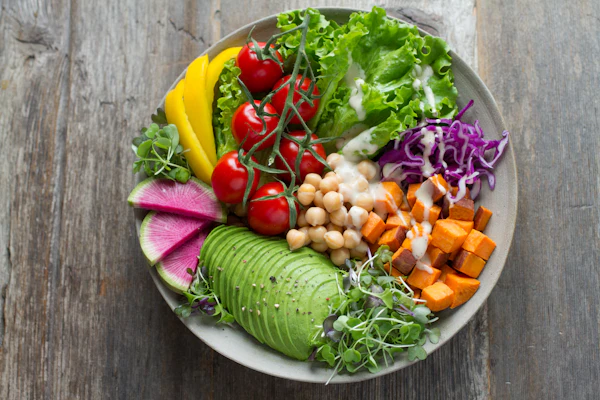
If counting calories is nutrition basics, tracking macros is the next level — and it's not nearly as complicated as it sounds. "Macros" is short for macronutrients: protein, carbohydrates, and fat. These are the three main categories that all food falls into, and together they account for every calorie you consume.
Tracking macros goes beyond just counting calories. It helps you understand the quality and composition of what you're eating, which matters for everything from hunger management to muscle retention to long-term energy. Once you understand macros, you'll look at food differently — in a genuinely useful way.
What Are Macronutrients?
Every food you eat is made up of some combination of these three macros:
- Protein: 4 calories per gram. The building block of muscle, organs, skin, and hormones. Critical for recovery, satiety, and preserving lean mass during a calorie deficit. Found in chicken, fish, eggs, legumes, dairy, tofu.
- Carbohydrates: 4 calories per gram. The body's preferred fuel source. Includes everything from sugar to oats to vegetables. Quality varies enormously — fiber-rich carbs behave very differently from refined ones.
- Fat: 9 calories per gram. Essential for hormone production, brain function, and absorbing fat-soluble vitamins. Found in oils, nuts, avocado, fatty fish, dairy.
Alcohol is sometimes called a "fourth macro" at 7 calories per gram — but it has no nutritional value, so we'll keep it simple and stick to the three.
Why Track Macros Instead of Just Calories?
You can lose weight by tracking only calories. But tracking macros helps you lose weight better:
- Protein protects your muscle. In a calorie deficit, your body can break down muscle for energy if protein intake is too low. Hitting a protein target ensures you're losing fat, not muscle.
- Different macros affect hunger differently. Protein is the most satiating macronutrient. Fat slows digestion. Refined carbs cause blood sugar spikes that lead to crashes and cravings. Understanding this lets you build meals that actually keep you full.
- It shifts focus from restriction to composition. Instead of just eating less, you're eating in a way that serves your body. This mental shift tends to produce more sustainable habits.
What Should Your Macro Split Be?
A common beginner-friendly split for weight loss is:
Protein: 30–35% of calories (or 0.7–1g per lb of bodyweight)
Carbohydrates: 35–45% of calories
Fat: 20–30% of calories
The single most important target to hit is protein. Research consistently shows that higher protein diets during a calorie deficit preserve more muscle mass and lead to greater fat loss compared to lower protein approaches — even at the same total calorie intake.
For most beginners, the fastest path to improvement is simply increasing protein and letting the carb/fat split sort itself out naturally.
How to Calculate Your Macro Targets
Start with your calorie target (based on your TDEE minus your deficit — see our calorie calculator guide). Then:
- Set protein first. Aim for 0.7–1g per pound of bodyweight (or 1.5–2.2g per kg). At 150 lbs, that's 105–150g of protein per day.
- Set fat next. At least 0.3g per pound of bodyweight (about 20% of calories) to support hormone function. At 150 lbs, that's around 45g of fat minimum.
- Fill remaining calories with carbs. Whatever calories are left after protein and fat are accounted for go to carbohydrates.
Example at 1,600 calories/day, 150 lbs bodyweight:
Protein: 130g × 4 = 520 calories
Fat: 50g × 9 = 450 calories
Carbs: (1,600 − 520 − 450) ÷ 4 = 158g carbs
Track Macros Together in Cal Couple
Cal Couple tracks calories AND macros for both partners simultaneously. See your protein, carbs, and fat in real time — and watch each other's progress.
Start Tracking Macros →High-Protein Foods to Hit Your Targets
For most people, protein is the hardest macro to hit. These foods give you the most protein per calorie:
- Chicken breast (cooked): ~31g protein per 100g, ~165 cal
- Non-fat Greek yogurt: ~17g per 170g serving, ~100 cal
- Cottage cheese (low-fat): ~14g per 100g, ~72 cal
- Canned tuna (in water): ~25g per 100g, ~116 cal
- Eggs: ~6g per egg, ~70 cal
- Edamame: ~12g per 100g, ~122 cal
- Tofu (firm): ~9g per 100g, ~76 cal
Building at least one of these into every meal makes hitting your protein target much more manageable.
The Couple Advantage in Macro Tracking
When both partners are tracking macros, meal planning gets far more efficient. You agree on dinner — a chicken stir-fry, say — and you both know the protein, carbs, and fat in that meal. One person logs it; both reference the same entry. If you're using an app like Cal Couple, you can even share meal logs between accounts, so cooking together means tracking together.
The social element also helps with protein habits in particular. When you're cooking for two, making a high-protein dinner is no more effort than a low-protein one — and when you're both aiming for a protein target, the shopping list reflects that automatically.
Frequently Asked Questions
- Do I need to track macros every day forever? No. Most experienced dieters track consistently for a few months, learn what their macros look like across different meals, and then reduce to periodic check-ins. The goal is building intuition, not permanent data entry.
- What happens if I hit my calorie goal but miss my protein? You'll still likely lose weight (calories drive fat loss), but you'll lose more muscle alongside fat, which is less ideal. Hitting protein is the most important macro target — prioritize it above the others.
- Is a high-carb or low-carb diet better for weight loss? Research shows that at equivalent protein intake and calorie levels, high-carb and low-carb diets produce similar weight loss over time. The best macro split for you is whichever one you can sustain. If you feel great on more carbs, eat more carbs. If you feel better on more fat, eat more fat.
- Should we have the same macro targets as a couple? No. Macro targets scale with your individual calorie goals and body weight, which differ between partners. The ratios (percentages) may be similar, but the absolute grams will vary.
The Bottom Line
Macro tracking is calorie tracking with context. Start with total calories and add protein as your first priority macro. Over time, paying attention to carbs and fat will give you a complete picture of your nutrition. The learning curve is short, and the payoff — in both results and understanding — is significant.